
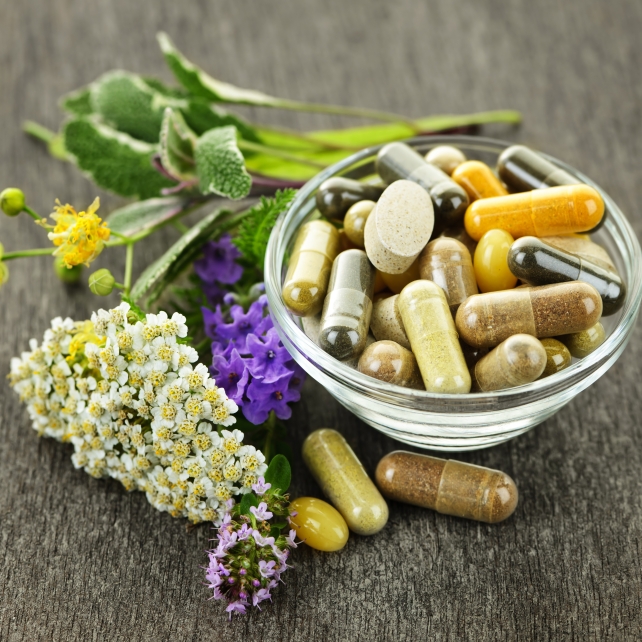
Across South Africa, an estimated 60-80% of the population uses traditional medicine at some point, whether alongside or instead of conventional treatment. For many patients, traditional healers (izangoma, izinyanga, amaxhwele) are a trusted first point of contact for illness, and indigenous plant remedies remain deeply woven into everyday health-seeking behaviour. Rather than treating this as a parallel system, modern healthcare has a real opportunity to bring traditional medicine into the fold as a genuine part of the care model, supported by good evidence, safety monitoring, and mutual respect between traditional and conventional practitioners.
A rich and living pharmacopoeia
Southern Africa's flora has produced some of the world's most recognisable botanicals. A few of the better-studied examples include:
- Pelargonium sidoides ("Umckaloabo"): probably the best-commercialised example, now sold internationally in complementary products for upper respiratory tract symptoms.
- Harpagophytum procumbens ("devil's claw"): widely used and researched for musculoskeletal pain.
- Sceletium tortuosum ("kanna" or "kougoed"): used traditionally by the San and Khoikhoi people for mood, stress relief, and social/spiritual purposes; now one of the more clinically developed examples, with a standardised extract studied in placebo-controlled human trials for anxiety and stress reactivity.
- Aloe ferox ("bitter aloe", Cape aloe): the bitter latex is a long-used traditional laxative, now a common ingredient in over-the-counter pharmacy laxatives and digestive products.
- Agathosma betulina (buchu): traditionally used as a diuretic, and for urinary tract and digestive complaints, and one of the most commercially developed South African botanicals, appearing in pharmacy products for bladder and kidney support.
- Aspalathus linearis (rooibos): familiar in both traditional and consumer wellness contexts.
Many of these plants have travelled the same path: originating in traditional healer practice as part of a broader diagnostic and treatment approach, and (through research and commercialisation) moving into standardised forms on pharmacy shelves. That journey is itself a working model of integration, not a replacement of one system by the other.
Where the science stands, and why integration is achievable
Some of Southern Africa's traditional botanicals already have a real foothold in evidence-based practice. Devil's claw and Pelargonium sidoides, for instance, are backed by a reasonable body of clinical research on specific, standardised extracts. Sceletium tortuosum's primary alkaloid, mesembrine, has been characterised as a serotonin reuptake inhibitor with additional PDE4-inhibiting activity, and a standardised extract has undergone placebo-controlled human trials for anxiety and stress reactivity, a good example of indigenous knowledge and modern pharmacology validating each other.
Commercialisation and pharmacy availability are also exactly why interaction awareness matters. Devil's claw has documented antiplatelet and mild anticoagulant-potentiating effects, relevant for patients on warfarin or other anticoagulant therapy. Aloe ferox, used chronically as a stimulant laxative, can contribute to electrolyte loss (particularly potassium), which matters for patients on diuretics or digoxin, where hypokalaemia increases toxicity risk. Sceletium's serotonergic mechanism raises a related consideration: as with any serotonin reuptake inhibitor, its combination with prescribed SSRIs, SNRIs, or MAOIs warrants clinical awareness.
Why full disclosure to your healthcare provider matters
Integration only works if it's built on complete information. A doctor or pharmacist can only account for a herbal remedy's effects if they know it's being used. Patients often stay silent, assuming a remedy is irrelevant ("it's just a tea") or fearing judgement, and that silence is where risk creeps in.
The fix: every medicine, supplement, and traditional remedy belongs in the conversation, every time.
For patients
- Tell your doctor or pharmacist about every remedy you use (herbal, traditional, or over-the-counter) at every consultation. It matters most when using chronic medication (antiretrovirals, anticoagulants, diabetes, or heart medication carry the highest interaction risk).
- Traditional and conventional care can work together with the right guidance. Don't stop a prescribed medicine for a traditional remedy without discussing it first.
- Be cautious of strong claims, especially around serious conditions like cancer or HIV, where a product promises a cure or replacement for conventional treatment.
- Source matters. Products from a registered pharmacy or recognised traditional health practitioner carry far less uncertainty than those from informal markets.
For healthcare providers
- Ask, don't assume. Make traditional and herbal medicine use a routine part of every medication history, not just intake.
- Flag interaction-prone patients: those on the medication classes above, or any narrow-therapeutic-index drug, warrant particular attention given documented interaction pathways.
- Engage as a collaborator, not a gatekeeper. Treating traditional remedy use as part of the overall care plan (including, where relevant, communicating with the traditional practitioner involved) builds trust and improves disclosure.
- Loop in pharmacist colleagues for interaction checks and dosing guidance as this field matures.
Closing thought
South Africa's traditional medicine landscape isn't a footnote to conventional healthcare; for the majority of patients, it already is healthcare. The path forward is integration: bringing traditional remedies into structured, evidence-based, safety-monitored care, built on open communication and genuine collaboration between traditional and conventional practitioners. Done well, this isn't a compromise between two systems; it is a more complete model of care for the patients both are meant to serve.
This article is intended for general informational purposes only and does not constitute medical advice or promote any specific product, brand, or therapeutic claim. Patients should consult a healthcare provider before combining traditional remedies with prescribed medication.